Tuesday, September 22, 2015

Heroes and Heroines Who Don't Drink Alcohol

by Elva Cobb Martin

Why would I want the heroes and heroines in my inspirational novels to be non-drinkers or convert to non-drinkers?

A key verse of scripture that has led me to this conviction is Proverbs 20:1
"Wine is a mocker, strong drink is raging: and whosoever is deceived thereby is not wise."
This verse strongly warns about inherent dangers associated with drinking alcohol.

The key phrase is "whosoever is deceived (by fermented wine, beer, liquor) is not wise." I do want main characters who are wise or who become wiser, as they grow. On the other hand, my villains might partake and be shown suffering many of the consequences. I believe I owe this contrast to my readers.

Here and elsewhere in this book of wisdom, Proverbs warns about a variety of personal and social evil consequences associated with drinking alcoholic beverages. The following notes are listed in my Life in the Spirit Study Bible published by Zondervan.


  • As a "mocker" it leads to a decreased capacity for self-control, a weakening of inhibitions and a disdaining of prudent behavior and righteous values.
  • As "raging" it contributes to disturbances, conflicts and violence in families and society.  
  • It is also associated with inefficiency, poverty, and injustice. Rulers are advised not to drink alcohol since it can affect their decisions.
In our contemporary world in such nations as the United States, the drinking of alcohol is a factor in more than 50% of all fatal car crashes, 75% of all crimes committed, and more than 30% of all murders. It is also implicated as a factor in sexual immorality, pregnancy outside of marriage and high divorce rates. As Christian writers we can show some of these very conflicts.

Abstinence helps guarantee avoidance of the pitfalls associated with drinking so why not inspire readers and the next generation to choose the better way?

Here is a scene from my contemporary wip Summer of Deception showing one way I dealt with alcohol involving my hero and heroine. The novel is set on a Charleston Tea Plantation.
The h/h, Luke and Rachel, are at a party on a yacht in the Charleston Harbor owned by friends Archer and his sister Morgan. Luke is with Morgan, Rachel is with Archer.


       Archer balled his fist and pressed Luke on the shoulder. “Boy, am I thirsty after that carriage ride through history. What are you drinking, old man?”
     “A Devil’s Triangle,” Luke answered, swirling his glass and staring straight at Archer. “Minus the devil.”
     Rachel glanced at Luke, but he had turned back to Morgan. They were the most striking couple in the room. Something about Morgan  leaning close to him annoyed Rachel.
     “Luke’s still walking his teetotaler plank, I see.” Archer’s voice brought Rachel back to face him. “I’m going to have a Wild Affair, what would you like, most beautiful lady in the room?”
      Rachel had never heard of the drinks mentioned but assumed they included alcohol. “Coke—or ginger ale, please.”   
      “Oh, no, another teetotaler in the house?” Morgan  bemoaned with a mock grimace.
        Luke regarded Rachel. He motioned toward the black bartender. “This guy’s been trained on Barbados, and he’s famous for his fruit and berry concoctions. You don’t want to settle for a soda, not here,  Rachel. At least try my drink—you can get it minus the alcohol.”
        So that’s what Luke had meant.
       “Okay, I’ll take a Devil’s Triangle—minus the devil.” The bartender handed Rachel a tall glass. She took a sip and delighted in the rich strawberry-lemon fruit drink with a touch of mint.

How do you treat alcohol in your novels? Leave a comment and please share this blog if you have time. Thanks for stopping by.

Elva Cobb Martin


Thursday, August 27, 2015

A Collection of Heroes. . . or Villains

by Elva Cobb Martin

Do you collect photos of possible heroes and/or villains?  I decided to share my file with you today. I don't know the names of some of these, but something about them inspires my imagination. What makes up a hero or a villain to you, historical or contemporary? Do any of these inspire your creativity? I chose one of these as my current pirate hero. Can you guess which one?


The one and only Colin Firth. What's not to like about this guy?


George Knightly, the perfect gentleman in Emma.
And here's a plethora of photos to stir your creativity.


And here are some famous ones from times past, starting with Rhett Butler!

What at team!

Eoin Mackey

Hope you've enjoyed my hero/villain file today. Send me your fave photo to add to my file!

Elva Cobb Martin


Thursday, August 13, 2015

17 Screenwriting Scenes to Use in Your Novel


by Guest blogger Amanda Patterson
Hope you enjoy the following guest blog. I certainly did. --Elva Martin

17 Screenwriting Scenes To Use In Your Novel


I found this list of the 17 most common scenes found in screenplays on The Script Lab and it got me thinking that authors can, and do, use all of these when writing novels. When we write books, we tell a story in scenes (action) and sequels (reaction). I divided the screenplay scenes, with their given definitions, into these two groups.

Although you are not writing a screenplay, these 17 scenes may give you more ideas for creating conflict, and, for making peace, in your plotting.

Scenes: This is where your characters act. They mostly plan, seduce, argue, escape, search, meet, talk, pursue and investigate in scenes. Scenes take up about 70% of your novel. 
  1. Preparation - What will it take to prepare for the task at hand?
  2. Revelation - The reader/audience finds out something important.
  3. Investigation - Gathering information.
  4. Recognition - The character finds out something important.
  5. The Gift - Using a prop with emotional investment and turning it into a weapon, emotional or otherwise.
  6. Escape - The character is trying to get away, avoid, or hide.
  7. Pursuit - The character is trying to follow, capture, or secure.
  8. Seduction - Someone must convince someone else.
  9. Opposites - Two characters from seemingly opposite poles are forced together.
  10. Unexpected Visitor - Someone unexpected shows up. Problems arise.
  11. Reversal of Expectations - A character expects a certain, very clear outcome, but another character surprises him, influencing him to reverse his intention and do something else - practically the opposite of what he planned to do.
Sequels: This is where your characters react. They think, reflect, process, rest, accept, and make peace in sequels. Sequels are also used to establish setting, reveal backstory, and show theme. 
  1. Setting - Where are we?
  2. Atmosphere/Mood - What is it like there?
  3. Introduction - Who is it we are dealing with here?
  4. Exposition - Necessary information through telling. Quick and brief.
  5. Transition - Getting from one place to another. Fast.
  6. Aftermath - How does the character feel about what just happened? 
I hope these scene ideas inspire you when you write your book.
If you want to learn how to write a book, join our Writers Write course in Johannesburg. 
 by Amanda Patterson. Follow her on PinterestFacebook,  Google+,  Tumblr  and Twitter. 
If you enjoyed this post, read:
Hope you'll comment if you enjoyed this guest blog and share on Twitter and FB.
Elva Cobb Martin 

Saturday, August 1, 2015

A Character's Emotional Wound

by Elva Cobb Martin

I have given emotional wounds to my heroes and heroines and that was before I really knew how important they could be in our stories. These hurts are actually at the very heart of who our character's are.

Angela Ackerman has written a great deal about the impact of a character's emotional wound and I am going to share some of her comments in this blog.

Definition: An emotional wound is a painful past event so emotionally damaging that it changes who your character is.

Ackerman says these traumas or bruises hold incredible power. They can change a character's motives, actions, and beliefs. They can damage their sense of self worth, filter how they view the world and influence how they interact with other people.

In my first novel, Summer of Deception, I have given the hero Luke two wounds. One physical/emotional and one plainly emotional.  He lost an eye in the Middle East conflict as a Marine. Later, his wife was killed in an auto accident. These two things have greatly impacted him and his interaction with my heroine. For example, he has lost his faith in God to a great extent and battles bitterness.

The heroine, Rachel, has suffered the loss of her mother, the dominance of a bad stepfather and more recently she has received a report from the DEA that her beloved brother has died in a plane crash while on a mission. She is insecure and slow to trust anyone.

All these things have happened to the hero and heroine before the story opens. But they really make up who they are.

Ackerman says:

  1. Wounds change everything
  2.  Every wound contains a lie  (like, Am I to blame?)
  3.  Wounds cause flaws to form (and causes one to strap on emotional armor to keep from being hurt again)   
A big part of our romance plot has to be dealing with these wounds through the tension and conflict they cause and make sure all things come full circle to some kind of peace and a plausible happy ending.

Do you know your character's wound? How important is it to your story and plot?

For much more on this subject,  you can check out Angela Ackermans' new book, Emotional Wounds Thesaurus.

Thanks for stopping by. Feel free to share and please do leave a comment.

Elva Cobb Martin


Tuesday, July 21, 2015

5 Good Reasons to Outline Your Novel - Guest blog

Guest blog by Amanda Patterson

Outlining isn't a necessity, but there are so many advantages to it that even die-hard 'pantsters' should think twice about rejecting it. I have taught hundreds of people to write and 90% of those authors who finish writing their books have used an outline of some sort. Most of the authors I’ve interviewed also use outlines.
Outlines can be: 50-page detailed plans; a simple series of index cards with a list of characters, major scenes, and sequels; structured timelines; a series of character questionnaires showing development, motivations,flaws and strengths; story maps; or one-page synopses. Outlining does not mean that you have to put in every detail. (Note: There are some outliners who do include everything.) It does mean that you have a map to help you navigate and finish a first draft. 
Some authors have plotted their stories for decades in their heads, making notes in journals. As George RR Martin, creator of A Song of Fire and Ice says: 
    All the major things have been planned since the beginning, since the early 90s, the major deaths and the general direction of things. Obviously, the details and the minor things have been things that I've discovered along the way, part of the fun of writing the books is making these discoveries along the journey. But the general structure of the books has been in my head all along. 
Source for Outlining Methods
Here are five advantages tor outlining your novel before you start: 
  1. There is very little chance of writer’s block. Getting stuck in a rut or losing the plot are the most common reasons people join our course. They have tried the ‘pantser’ method and failed. None of these writers have outlined or worried about whether they have a plot that is strong enough to see them through. Once they join Writers Write, and work out that they need a plan, they are much happier and mostly more successful. If you get stuck, you simply look at the outline and move on.
  2. You reduce the number of rewrites and edits. Outlining is similar, in many ways, to a first draft. If you spend time planning the book, you will have already written at least one rough draft before you start on the manuscript. You will also be able to write more quickly because you have a plan. The freedom of having an outline allows you to be more creative when you’re writing scenes. You can use your writing skills to craft the story instead of frantically trying to think about what happens next.
  3. You spot problem areas before you begin. It is easy to write yourself and your characters into impossible situations. It might be fun, but you may have to scrap an entire book and begin again if you can’t write yourself out of it.
  4. It improves creativity. By thinking everything through and planning your story you’re stimulating the creative process. Even if you write the first draft without referring to your outline, you will have a head start with your story. You will also be able to thread ideas through the story and to foreshadow more effectively. You can’t foreshadow if you don’t know what is going to happen next.
  5. You can develop compelling characters with clear story goals. This allows you to imagine how your character will develop over the course of the story. Because you know what happens, his or her arc will never be out of step with the rest of the manuscript. 
What do you have to lose by outlining? Very little. In more than 10 years of teaching, I have never had students say that it has made their writing worse. Most of them are grateful that they do not have to waste more time on books that fall flat. 
If you want to learn how to write a book, join our Writers Write course in Johannesburg. Email  news@writerswrite.co.za for more information.

    If you enjoyed this post, read 
    1. Six Sub-Plots That Add Style To Your Story 
    2. Five guaranteed ways to bore your reader
    3. The Author’s Promise - two things every writer should do
    4. What is the difference between a commercial and a literary plot?
    5. The Top 10 Tips for Plotting and Finishing a Book
    Amanda is the founder of Writers Write. Follow her on  Pinterest,  Facebook,  Google+,  Tumblr  and  Twitter.  

    Hope you enjoyed this great post by Writing Instructor Amanda Patterson.
    Thanks for stopping by. Do you outline a novel? Why or why not?
    Join the conversation and share this blog if it helped you.

    Elva Cobb Martin

    Thursday, July 16, 2015

    The Beauty of Brevity

    by Guest blogger Julie Lessman

    Hello, Julie Lessman here, and despite the fact that most of my books can be used as doorstops, I do believe the statement above bears some truth. Which is probably why the judge mentioned above did not score me very high on A Passion Most Pure. Sigh. Because the truth is, I’m just one of those 500+page authors who thinks the only definition of “brief” is Hanes underwear. 


    But honestly, can I help it if I was at the end of the alphabetical line when God gave out talents, gifting me with verbosity rather than brevity?

    Yes, I can. And so can you. 

    Don’t get me wrong. I’m not saying that most of our prose has to be short and succinct because frankly that would be pretty boring, and the majority of us would be out of business. But I am saying that we need to use our words wisely. It’s my contention that every single word we use in a sentence should have a purpose, be it for clarity, description, rhythm, pace, drama, analogy, etc.—or just plain beautiful sound. 

    Another judge once told me that if our sentences are too beautifully written, to the point they stop a reader in his or her tracks just to reread it for sheer pleasure, that’s not a good thing. Apparently this judge felt that anything that stops the flow of the novel—including beautiful phrases or sentences—risks pulling the reader out of the story, thereby distracting from the overall pleasure. 

    I couldn’t disagree more. 

    Yes, I agree you NEVER want to pull a reader out of the story with things like:

    Inaccurate Historical Facts (i.e. I originally had chocolate chip cookies in my WWI-era A Passion Most Pure when they weren’t invented until mid-30s)
    Chalkboard Word Usage (i.e. words that are so wrong, they almost sound like fingernails on a chalkboard, such as one book I read where the author had the heroine “skipping up to her front door” during a tragedy)
    Unfeasible Plot Points (you know, the kind that make you roll your eyes? )
    Unnatural Dialogue
    Incorrect Etymology (i.e. I have read some form of the term “wrap one’s mind/brain around it in at least six historical novels when this is clearly a modern term)
    Trite or Overused Phrasing (i.e. At least half the novels I read have some form of the phrase “his/her smile did not quite reach his/her eyes, including my first book, so now when I see it in any book, I cringe).
    —Poor Grammar or Typos (i.e. When I was a travel writer, the biggest typo I ever made was in a travel piece on Kauai in which I praised the island’s beaches with the following sentence: The island of Kauai is famous for its beautiful whores (should have been shores).
    —Run-on sentences
    —Lack of Clarity

    But beautiful prose that captures your heart? Oh, honey, I highlight phrases like this in every book I read, often earmarking those authors as new favorites because of their gift with words. And I’m not alone, either. Check out this article by Jennifer Schafer of BuzzFeed on 51 Of The Most Beautiful Sentences In Literature.

    Soooo … I thought it would be fun to list some “beautiful” brief lines from some of my favorite authors including the Seekers, along with the author’s explanation (or mine) as to why they (or I) love their particular line(s). Keep in mind that my definition of “brevity” is a sentence or sentences that accomplish any of the following things in a mere sentence or so, packing more punch into a novel with the least amount of words.

    —Inspires
    —Educates
    —Paints a Picture
    —Reveals a Truth
    —Is Clever
    —Is Humorous
    —Is Profound
    —Challenges
    —Transports the reader
    —Steals One’s Breath
    —Elicits Emotion

    HERE WE GO:

    1.) He wept. — The Bible, John 11:35. The shortest verse in the Bible, but surely one of the most potent and powerful in Scripture.

    2.) My parents were lace-curtain Irish, righteous as three popes. —Irish Born by Nora Roberts. This is a line that has stayed with me when I used to read secular novels, and the reason is that in nine measly words, Nora Roberts painted an entire heritage for me that spoke volumes in very few words. 

    3.) Too tiny for six and too thin for any age, she had long dark hair caught in a single, bedraggled braid and blue eyes awash in fear and wishes.Texas Tea by Mary Connealy from The Seekers new Historical Novella collection, With This Spark. I love this description by Mary because it paints such a vivid picture of the heroine as a child, plus the slight “sh” alliteration with “blue eyes awash in fear and wishes.”

    4.) Though the air carried the scent of mowed grass, spring flowers and fresh-turned dirt, the vile odors that had clung to Max filled her nostrils still, as if he stood at her side, not laid out at her feet. The Bounty Hunter’s Redemption by Janet Dean, a strong sensory description that Janet says, “tugs at her heart when widow Carly recalls the terrible marriage she’d endured as she stands before her dead husband’s grave.”

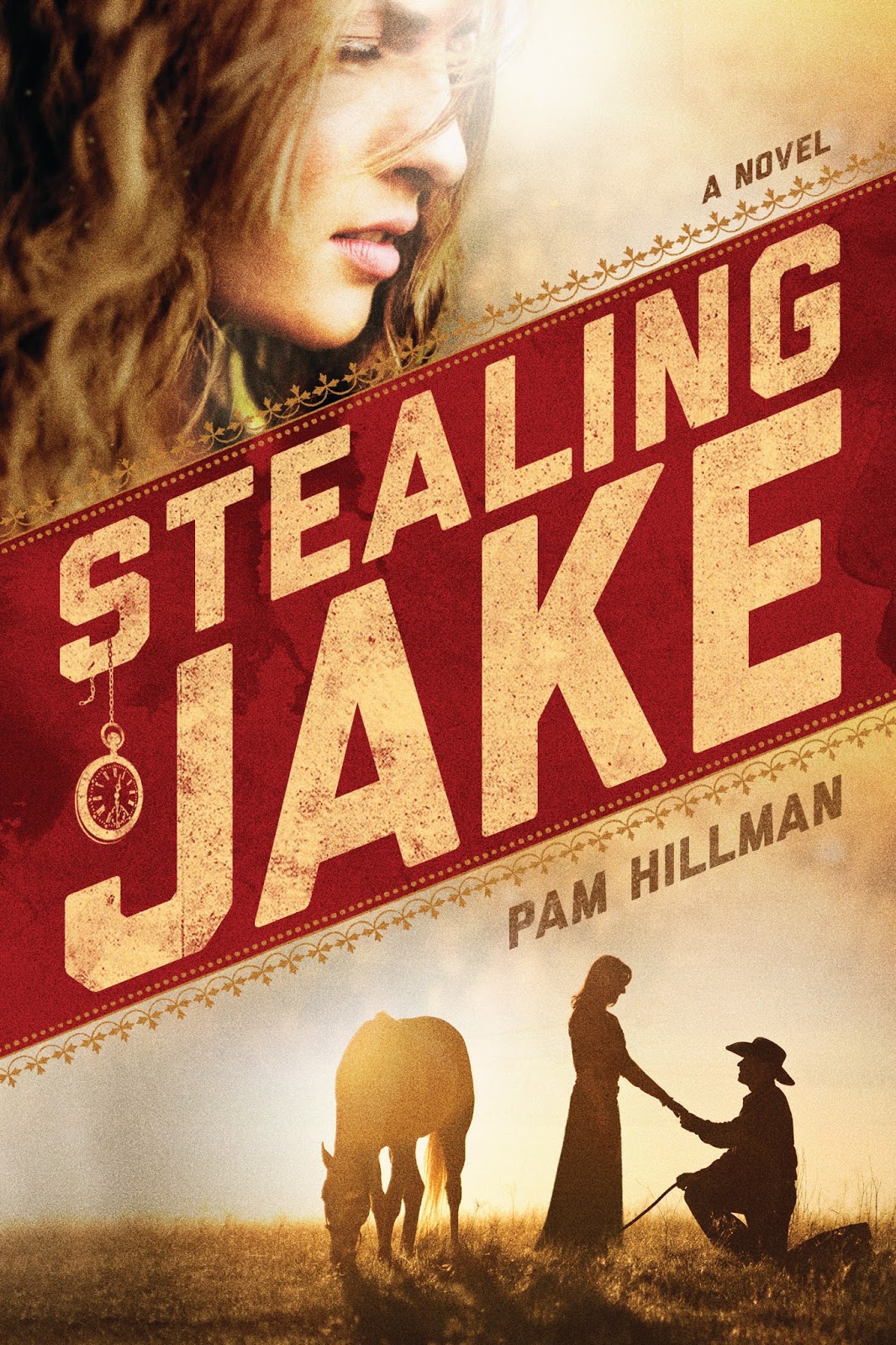
    5.) I DON’T WANT TO GO BACK TO THAT LIFE. EVER.Stealing Jake by Pam Hillman, who told me, “I received my copies of Stealing Jake last week and the sentence Tyndale put on the back slapped me upside the head. Seeing those ten words, bam, bam, bam, brought Livy’s struggle back full force. The line isn’t beautiful, but it is powerful.” I agree, Pam!

    6.) Drops of rain fell, then paused. The wind increased, and the trees lining the road’s edge rubbed together, whining. — Healing the Lawman’s Heart by Ruth Logan Herne. Ruth likes this line because it’s “all about timing. Gods. Ours. Our ineptitude. Our inability to listen the first time.... when we really should.” I like it because of the word “whining,” soooo audible and visual!!

    7.) He stepped into her personal space and she realized that the tantalizing aroma she’d smelled when she first walked into the house was the fragrance of coming home.No Time for Love from the With This Kiss Contemporary Collection by Tina Radcliffe, who says, “this is from the heroine's point of view as she realizes she has fallen in love with the hero. It succinctly says it all for her.” For me, too, Tina, because “coming home” for each of us often relates to smells.

    8.) Hope had never served her well. — The Thorn Bearer by Pepper Basham. I Frankly, I had trouble picking just one of Pepper’s lines because she has a gift for unique phrasing. I chose this one because it’s short and powerful.

    9.) He wanted desperately to stay, just a little while longer.  But he couldn't be here, in this place, with her.  It was calm here.  She was innocent and beautiful and perfect. 
             He was not.  He didn't want his mess or his mental illness or his past anywhere near her.  He wanted to protect her from a lot of things, but most of all from himself. A Love Like Ours by Becky Wade, who says, "These lines are among my favorites from A Love Like Ours because I love romance!  To me, it’s just plain old romantic when a tough, battle-scarred man (like Jake Porter) tries everything in his power not to fall for his heroine.  And can’t help falling for her anyway.  That struggle, that tension, is just so juicy to read!"

    10.) And finally, since I’m obviously more familiar with my own favorite lines in my books AND because this is my blog, here’s a few phrases and lines from my books along with why I like them:

    As writers, we are always looking for new ways to say things and bring emotions to the surface in a visual way, so I am especially fond of the following phrases because to me, they are like movie “action” clips that I can actually see, per a prior blog of mine, Keeping It "Reel" ... Or a "Novel" Approach to Putting a Movie in Your Reader's Mind.

    A Passion Most Pure:

    A sick feeling cowered in her stomach.

    The oxygen swirled still in her lungs.

    Heat roared to his cheeks.


    AND here are a few full lines from my books and just why I like them:             
                                
    He studied the strong line of her jaw, the lush, full lips so ripe for tasting, the graceful curve of her neck plunging toward a body that took his breath away. Friends? Not likely. Okay, for some reason, I love the word “plunging” here because it has a double meaning that applies to the hero as well, who is “plunging” into the waters of attraction against his will.

    Dear God in Heaven, he wanted her … but he didn’t want her. I really like the accent-mark effect on the word “her” in this line, which to me, states two different feelings in the hero while using the same word.

    His lips were white, his eyes red, and a vein in his temple throbbed a dangerous blue. Not a good color combination. This just makes me smile every time I read it, and if you knew the cantankerous hero, Mitch Dennehy, you’d smile too!

    A woman who was a feast to his eyes but a drought to his soul. I am really fond of opposite analogies that describe the same person or thing because it deepens and broadens the description, in my opinion.  

    His statement drifted in her brain, its impact silent, slow, and deep, like a knick she didn’t know she had until she saw the blood on her hand. I absolutely love this line, because as a person who gets a LOT of knife cuts in the kitchen because I don’t feel them, this perfectly describes how my character feels when the hero says something that shocks her to the core.

    Why?” he asked quietly, and the word made her flinch, like a sudden shaft of light in a dark cellar where roaches and rats skittered. I hate roaches, and I flinch and freeze if I ever see them when I turn the light on in our basement. It’s an awful feeling, and one that describes my heroine’s reaction perfectly when a terrorizing truth about her is revealed.

    Cluny sat ramrod straight on the couch like the garden gnome in the neighbor’s yard, displaying a nervous amount of teeth in a cast-iron grin. To me, a steel grin and spine screams guilt while the idea of a garden gnome also highlights the fact that 14-year-old Cluny is inside on a sunny day, much to the hero’s angst.

    Sweet thunderation—deliver me from pretty men! For me, this line sets up the story in so little words—introducing a Texas heroine who’s been dumped at the altar by a fortune-seeking pretty boy.
    Okay, we’re done, and this blog may not be brief, but it IS one of my shortest, so that has to count for something, right??? 

    GIVEAWAY:
    Now it’s your turn—tell us some of your favorite lines from your own work or from other authors, and I’ll enter you in the drawing for your choice of any of my books, including my upcoming indie novel, Isle of Hope, which releases this fall and is, by the way, my longest book to date. Sigh.

    ABOUT JULIE:
    In addition to being verbose, Julie Lessman is the award-winning author of The Daughters of Boston, Winds of Change, and Heart of San Francisco series, was named American Christian Fiction Writers 2009 Debut Author of the Year and voted #1 Romance Author of the year in Family Fiction magazine’s 2012 and 2011 Readers Choice Awards. Julie has garnered 17 RWA and other awards and made Booklist’s 2010 Top 10 Inspirational Fiction. Her latest novel, Surprised by Love, appeared on Family Fiction magazine’s list of Top Ten Novels of 2014. Her indie book A Light in the Window is an International Digital Awards winner, a 2013 Readers' Crown Award winner, and a 2013 Book Buyers Best Award winner. 


    You can contact Julie and read excerpts from her books at www.julielessman.com, or through Facebook, Twitter, Google Plus, or Pinterest, as well as sign up for her newsletter. Check out Julie’s group blog, The Seekers, Writers Digest 2013, 2014, and 2015 “Best 101 Websites for Writers,” and Julie’s own personal blog, Journal Jots, voted blog of the month in the Readers’ Choice poll of Book Fun 
                                               ***

    Thanks for stopping by today. Hope you enjoyed Julie Lessman's blog I decided to share. Do leave a comment and share on twitter and FB if you liked it.

    Elva Cobb Martin

    Wednesday, July 8, 2015

    How to Plot a Perfect Scene in 10 Minutes - Guest Post

    Below is a guest blog from  Anthony Ehlers, an author and blogger with a strong writing group in Johannesburg.


    Breaking up your scene into bite-size units will make your plotting and writing easier. It will also save you time because you won’t have frustrating rewrites.
    Plotting is really a ‘to-do list’ for you as a writer – you need to know what will drive the story forward, what settings you will throw into the mix, what conflict your characters will face, and where the scene will end.
    Block out the scene
    Say you’re going to write a scene of about 1,000-1,500 words, you’ll probably need 10 plot points to keep you on track. Grab a piece of lined paper. At the top of the page, put your scene summary in a block. For example: Nik, the rock star that VIP bodyguard Jade is protecting, picks up a model at the hotel bar. Jade finds Nik dead in his room the next morning.
    Isolate the drama and action
    Down the margin of the page, jot down the numbers 1 to 10. Next to each write down the sequence of events – focusing only the parts where ‘something happens’ in one clear and simple sentence – make sure it has an action word. It could look like this:
    1. Nik convinces Jade to let him go to Chrome Bar.
    2. At bar, Jade has to deal with a nosy journalist.
    3. She thinks the bar is too crowded and insists they return to suite.
    4. Just then a Kim Kardashian-lookalike model arrives at the bar. Nik offers to buy her a mojito.
    5. Nik openly flirts with ‘Kim’ to annoy Jade.
    6. Nik whispers to Jade that he and ‘Kim’ are going up to his suite.
    7. She follows them up to the penthouse and does a security check.
    8. While ‘Kim’ is in the bathroom, Jade checks her purse for any cameras or listening devices.
    9. In the adjoining suite, Jade is restless but eventually falls asleep.
    10. The next morning, she opens Nik’s door and finds him naked and dead, with a bullet hole in the middle of his head. ‘Kim’ is gone.


    Tease out each plot point
    Now, all you have to do is take each plot point and write 100-150 words on each and you’ll have your scene written before you know it. This is where you can have fun with character development, dialogue, etc., knowing your ‘story spine’ is in place.
    Five tips to keep you on track
    1. Always end the scene on a high note or twist if you can. You want the reader to think, ‘What happens next?’
    2. Be clear what your character’s goal is in the scene. In this scene it may be: ‘Jade wants to keep Nik safe but can’t protect him from himself.’
    3. You can use a single setting or multiple locations, but the plot should be the consistent thread in the scene.
    4. Don’t ‘dawdle’ in the scene.  Be careful of going off on tangents. Keep the story moving forward.
    5. Put a time limit on your planning so that you’re not tempted to populate it with unnecessary detail.
    If you want to learn how to write a book, join our Writers Write course in Johannesburg. 
     by Anthony Ehlers
    If you enjoyed this post, read:
    Anthony Ehlers is a reluctant blogger. A child of the 70s, he’s a late converter to the (sometimes scary) world of social media. As a creative writing facilitator, he loves sharing ideas around storytelling and the blog post is another way to reach out to fellow writers no matter their stage of the journey. He always encourages delegates with energy, humour and his insights into novels, short stories and scriptwriting. He sometimes lurks on Facebook and flits on to a branch of Twitter  when his Inbox is empty (which isn’t a lot these days).
                                                     ******

    Thanks for stopping by! Hope you enjoyed this guest blog. Do you have advice to share about writing great scenes?

    Elva Cobb Martin